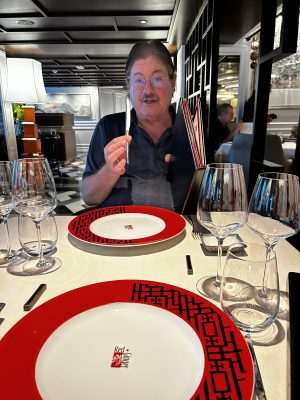
Santander is our last port of call on the cruise. When I hear the name I think of banks and loans. We were here once before to rent a car and drive to Ribadesella, Spain, also on the northern coast. That was one of my favorite trips because we drove into the mountains to Pico de Europas National Park. We also drove to Ovieto, Spain, to see the exposition the Sudarium, Jesus’ burial face cloth (see John 20:7).
Our day here was short, not because of Oceania, but because we had to pack up for our disembarkation in Bilbao the next day. We went to Mass at the Assumption of Our Lady cathedral.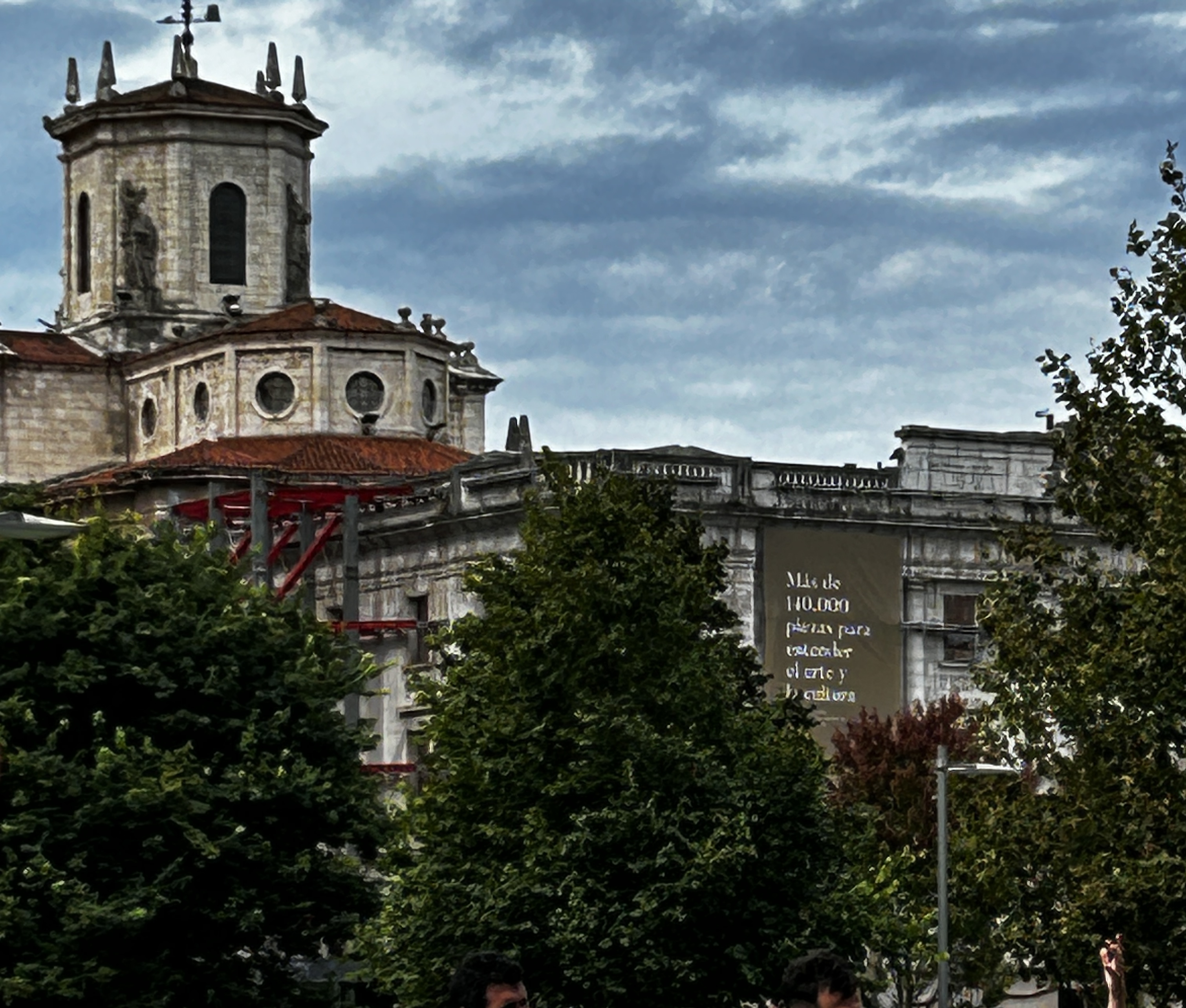 Then opted for a Hop on Hop Off Bus tour and a visit to a modern art museum.
The weather was clear and sunny for a change. Santander is nice to visit because so much of its land is devoted to green parkland and clean seashore. The bus drove us all around like it usually does, which earphones stuck into the side of the bus dialed to the English station. The sign said to dial to #3 for English, but #3 was French. So we moved it to #1. I’ve had mixed experiences with these buses. It’s a good way to get an overall picture of the city before deciding what specific places you want to see. Or maybe a good way to get a general look at the place if you have only a short time there. The downside is the tourists and the occasional construction that diverts the bus routes (that happened in Thessaloniki). But we played tourist today and did it. The best part was driving through the parks and along the ocean.
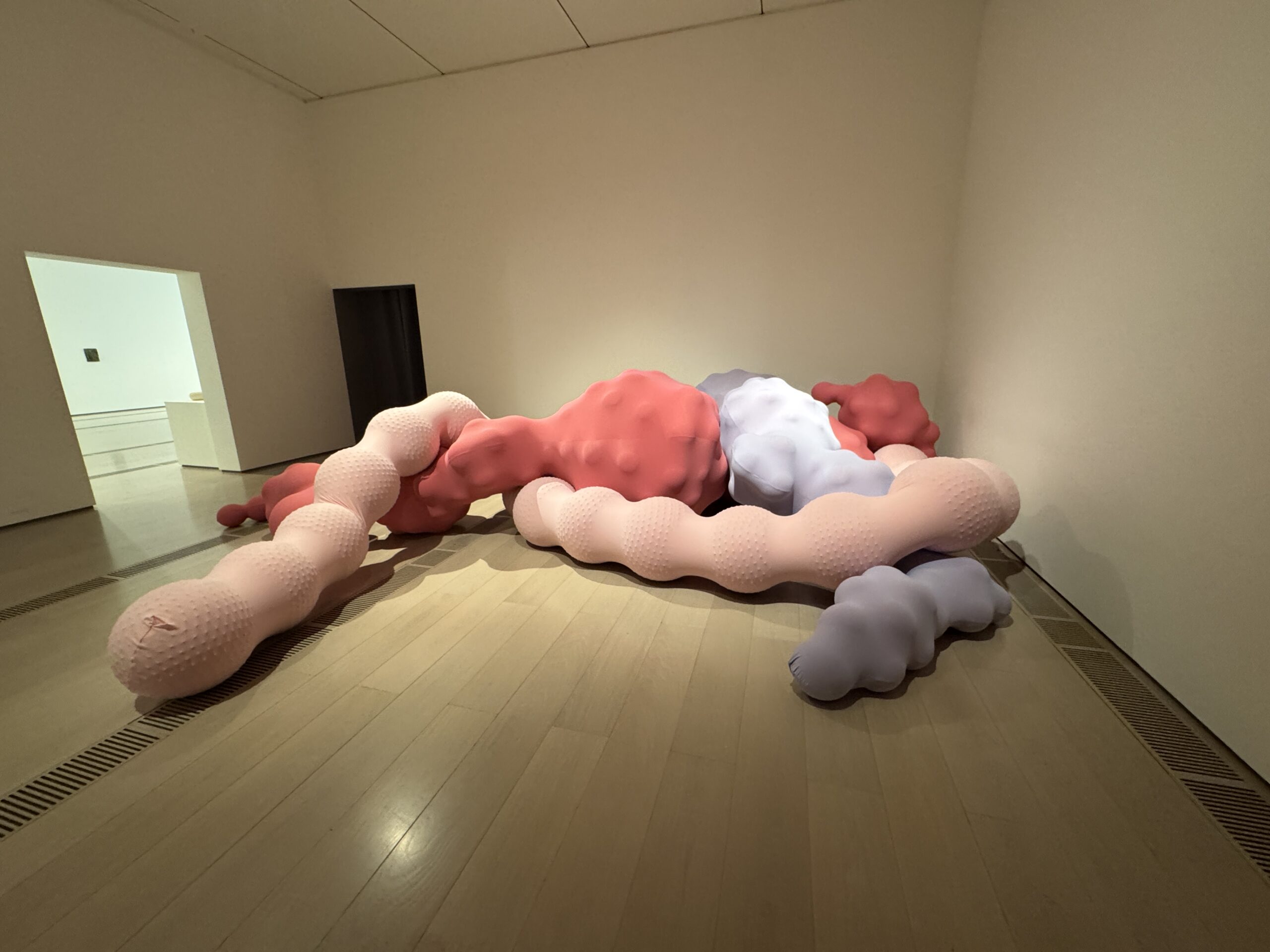
Since we had free tickets, Rebecca talked me into going to a Modern Art museum called Centro Botin. We went up one floor in an elevator large enough to park a car. Once out of the elevator, I knew immediately why I don’t like modern art. These pictures explain it all. I can’t even describe what this is. Maybe I could create my own modern art by placing a half-eaten jar of Skippy peanut butter upside down on the head of a stuffed rabbit wearing Indian feathers. That could be art.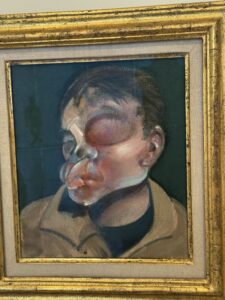
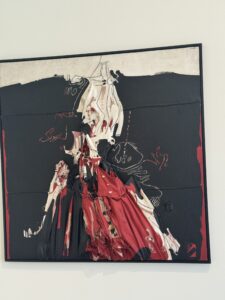
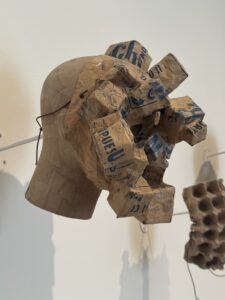
There was also “sound” art with pieces of tin hanging from the ceiling with a small amplifier attached. It just hung there making strange sounds. I was impressed! I was thinking about creating “sound” art with another kind of manufactured material that makes gastrointestinal sounds. The possibilities are endless.
For a quick history:
The Romans transformed the Santander area into a strategic port for trade and military operations. After the collapse of the Western Roman Empire in the 5th century, Santander became part of the Visigothic Kingdom. Christianity began spreading to these barbarians in the area. Small monastic communities appeared.
The name, “Santander,” is derived from “Sancti Emeterii” (Saint Emeterius)—a Roman soldier martyred with Celedonius during the Diocletian persecutions in the late 3rd century. Their relics were brought to the region.
When the Muslims conquered most of the Iberian Peninsula in 711, the mountainous terrain kept Santander safe and to remain a Christian area. It became part of the Kingdom of Asturias, which supported the Christian resistance.
By the 11th century, Santander became a significant port. The construction of a church dedicated to Saints Emeterius and Celedonius began in the 12th century. It later became the Cathedral of Nuestra Señora de la Asunción. During this period, Santander became part of the Christian Kingdom of Castile, supporting pilgrimages along the Camino de Santiago de Compostela.
In 1187, King Alfonso VIII of Castile granted Santander a royal charter. Santander, like much of Europe, was struck by the Black Death (1348–1350), which devastated the population.
Santander was occupied by French forces during the Peninsular War (1808–1814) but was liberated in 1813. In the 19th century, the port expanded. Banco Santander was founded in 1857 to finance trade, laying the groundwork for one of Spain’s largest banks.
On February 15, 1941, a catastrophic fire destroyed much of Santander’s historic center and parts of the cathedral. During the Spanish Civil War (1936–1939), there was limited fighting in Santander because it aligned with Franco’s Nationalists. After Franco’s death in 1975, Spain’s moved toward democracy and Santander became the capital of the Cantabria region in 1982.
This post is relatively short. We didn’t do much. Sometimes I like hanging around on the ship as much as (or even more) as getting off in a port. This was one of those days.
.
2 thoughts on “Santander – Day 12 of 55”
You make me laugh at loud. I agree with you about the art.
The art was terrible.